

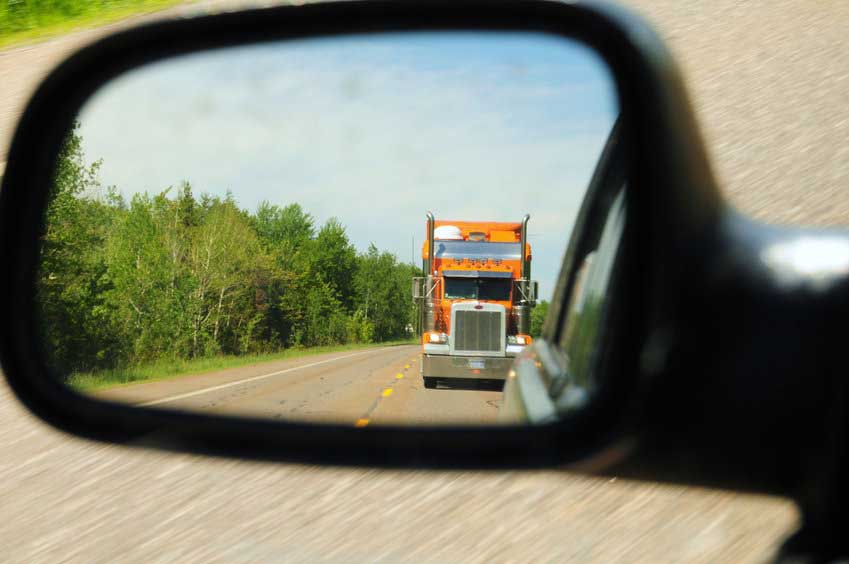
Big rigs move almost every product Americans use, making them essential for the U.S. economy. However, these 80,000-pound behemoths are also the most dangerous vehicles on the road. When an 80,000 semi hits a car weighing 44,00 pounds, about the U.S. average, occupants of the smaller vehicle are fortunate if they survive.
A Kansas & Missouri truck accident attorney at DeVaughn James Injury Lawyers can help if you or a family member is a victim of a commercial truck accident. Our firm is the largest personal injury firm in Kansas and out track record in obtaining significant settlements and verdicts for clients injured in commercial truck accidents is second to none.
Based on the circumstances of the truck accident, your injuries, and prognosis, we know a reasonable settlement amount for your claim and will fight so that you may receive the compensation you deserve for your injuries.
Recent Commercial Truck Accident Statistics in Kansas and Missouri
In Kansas, there were 2,123 large trucks or buses involved in crashes in 2025. Of these, 71 of these included fatal injuries, up from 62 the prior year but lower than the 83 fatalities in 2023 and the 82 in 2022.
In Missouri, there were 5,663 such crashes in 2025, with 115 fatalities. The number of fatalities has dropped considerably from the 154 people killed in 2024, 132 in 2023, and 148 in 2022. There were 2,569 injuries due to truck crashes in 2025, numbers that have not changed significantly since the recent record of 2,706 in 2022.
On the national level, large truck crashes have increased 30 percent from 2014 to 2024. In 2024, there were 120,724 large trucks involved in crashes resulting in an injury.
In 2025, Kansas’ share of fatal truck crashes was 12.4 percent of all deadly motor vehicle accidents, accounting for 1.2 percent of national truck crash fatalities. While Missouri’s share of fatal truck accidents was 10.4 percent of all such fatal accidents, the state accounted for 2.7 percent of national truck crash fatalities, more than twice that of Kansas.
The Worst Roads for Truck Accidents
In Missouri and Kansas, the worst road for commercial truck accidents is I-70, an extremely congested major freight route between Kansas City and St. Louis that brings semi-trucks into close contact with passenger vehicles. Since it is also the oldest section of the interstate, with some parts dating back 70 years, its infrastructure is badly in need of upgrades.
Hundreds of collisions occur annually on 1-70, with the worst intersections including:
- I-70 and Grand Boulevard: Recent truck accidents at or around this site include a semi-truck overturning in July 2026, causing shutdown of all I-70 eastbound lanes. In 2024, a semi-truck crash at this intersection killed a 3-year-old girl, although the driver of the car may have been at fault. Multiple other vehicles were caught up in the collision.
- I-70 and I-435 in Kansas City: The complicated highway interchanges here often confuse drivers. This is the single most dangerous intersection in the city due to high-speed merging from various directions. A crash in September 2026 killed two people when their Jeep ran off I-435 and hit a semi-truck. The driver apparently suffered a medical emergency. That same day, a pedestrian was struck and killed by a semi on northbound I-435.
While the Missouri Department of Transportation is frequently making upgrades to the I-70 corridor, including increasing the efficiency of freight movements along the route and modernizing existing pavement and bridges, it is a challenging project. Two hundred miles of I-70 will be expanded to three lanes in each direction from Blue Springs to Wentzville.
I-44 is another dangerous Missouri highway, as it not only features heavy truck traffic but also confusing and outdated off ramps. The infrastructure is outdated, with part of the highway not up to current interstate standards. Much of the terrain is difficult, with short, steep hills and many curves. In winter, snow and ice conditions make this route especially treacherous for trucks, causing them to skid across the median or fall into embankments.
In Kansas, I-35 is another highway with high truck accident rates. Also known as Highway 1, it crosses the entire state east to west, I-35 is a prime route for cross-country freight hauling.
What Contributes to Truck Accident Rates in Kansas and Missouri?
There are many contributing factors to truck accident rates in Kansas and Missouri, including:
Driver Error
Driver error is a major contributor to truck accident rates in Kansas and Missouri, as it is elsewhere in the country. Such errors include:
- Aggressive driving
- Distracted driving
- Driving under the influence of alcohol or drugs
- Fatigue
- Following too closely
- Improperly loaded cargo
- Inadequate driver training
- Speeding
- Sudden lane changes
Of all driver errors, speeding is responsible for approximately one-third of all truck accidents.
Keep in mind that truck accidents at interchanges may start with a truck slowly starting to merge into slow-moving traffic. If there is a sudden lane change, a pileup can result. When traffic slows near a busy interchange ramp, rear end collisions may occur.
Truck Maintenance
Truck maintenance, or the lack of it, is another common cause of truck accidents. Tire blowouts, failed brakes, and unstable freight can result in crashes, rollovers, and jackknifing.
Other factors beyond the immediate control of the truck driver include:
- Poor visibility during inclement weather
- Confusing signage at intersections
- Sharp curves at interchanges with short merge lanes
Rural Conditions
Much of Kansas and Missouri are rural. While many commercial truck accidents occur in more urbanized areas, a substantial number happen on rural highways. Such roadways may have higher speed limits, inadequate street lighting, and unmarked intersections. Many are two lane, narrow highways without paved shoulders or median barriers.
The higher the speed limit, the longer is takes a big rig to brake safely. During harvest season in these agricultural areas, slow-moving large farm equipment shares the rural roadways with truckers. Truck drivers may rear end farm vehicles or hit them when attempting to pass.
Truckers in western Kansas are also vulnerable to the high winds triggering dust storms that quickly cause blackout conditions on highways. In March 2025, such a dust storm on I-70 resulted in a truck and car pileup involved dozens of vehicles and killing eight people.
FMCSA Regulations and Truck Accidents
The Federal Motor Carrier Safety Administration (FMCSA) regulates virtually every aspect of the commercial trucking industry. The most common violations leading to truck accidents includes hours-of-service violations, such as exceeding the permitted 11-hour driving limit or not taking required 30-minute breaks. Time is money, and trucking companies may pressure their drivers to exceed mandated limits.
Kansas and Missouri Truck Accident Statutes
In Kansas, the statute of limitations for filing a personal injury lawsuit is generally two years from the date of the accident. In Missouri, the statute of limitations is five years from the accident date. It is crucial to consult an experienced truck accident lawyer as soon as possible so that valuable evidence, such as surveillance and dash cam videos, are not lost.
Missouri uses a pure comparative fault system when it comes to negligence. Even if you were partly at fault for the accident, you can still receive compensation, even if, theoretically if you were 99% responsible. Compensation is reduced by the percentage of fault. Kansas operates under a modified comparative fault system, in which you cannot recover damages if you were 50% or more at fault.
Contact a Truck Accident Lawyer
If you or someone you know was seriously injured in a commercial truck accident in Kansas or Missouri, you need the expertise of DeVaughn James Injury Lawyers. When it comes to truck accidents, our firm has two of the only 200 attorneys nationwide board certified in truck accident law. While most truck accident claims are settled, we will litigate your case if the insurance company fails to agree to a fair settlement amount.
Schedule a free, no-obligation consultation today.